DISCLAIMER: We earn a commission on some purchases you make through our site. Here's how affiliate links work.
Choosing a baby jumper can feel overwhelming, especially when parents are trying to balance safety, long-term comfort, and real-life usability. Many products look similar at first glance, yet daily use often reveals important differences that only show up over time. This guide answers one of the most common questions parents ask: What is the best rated baby jumper? Instead of relying on marketing claims or surface-level impressions, this article is built entirely on recurring patterns found in real Amazon reviews and Q&A sections, focusing on what parents consistently report after weeks of use.
Below, you’ll find deep, review-based analysis of five popular baby jumpers, followed by broader buyer guidance, safety considerations, and practical advice for families.
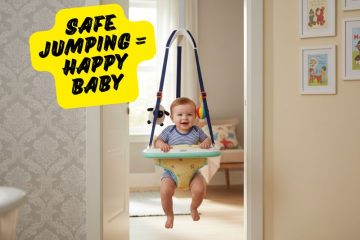
Parents repeatedly mention ease of setup as one of the strongest positives. Multiple reviews note that the jumper arrives mostly assembled and can be mounted in minutes, which matters for caregivers juggling busy routines. The door frame attachment is commonly described as stable once installed, with little movement during normal bouncing.
However, across multiple reviews, a recurring issue appears around fit and sizing. Several parents report that the seat feels too large for younger babies, even those who meet the stated minimum age. After a few weeks of use, some parents noticed their baby leaning backward, causing the rough strap material to rub against the face or neck area. This resulted in skin irritation or rash for more than one family, especially with very active babies.
After 3–4 weeks of use
- Babies remain interested and engaged, especially with added toy rings.
- Height adjustments are used frequently but described as difficult to fine-tune.
- Some parents add padding or barriers to prevent strap contact with skin.
Who should NOT buy this
- Parents of smaller or younger 6-month-olds.
- Babies with sensitive skin prone to irritation.
#1 common buyer mistake
- Using the jumper too early, assuming age recommendation equals proper fit.
Editorial scores (long-term)
- Comfort: 6/10
- Recurring issues: 5/10
- Value over time: 7/10
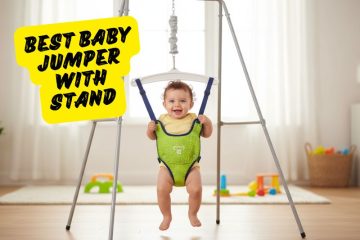
The most consistent theme across reviews is sturdiness. Parents repeatedly emphasize feeling secure because this jumper does not rely on a door frame. The freestanding design is often chosen specifically by families uncomfortable with doorway-mounted jumpers or living in homes without suitable door ledges.
After several weeks of use, parents note that babies often develop a strong attachment to this jumper, using it daily. The frame stability on rugs and patios is mentioned multiple times, with little to no sliding. That said, the physical size of the unit becomes more noticeable over time. Several parents mention leaving it permanently set up because disassembly is inconvenient.
After 3–4 weeks of use
- Babies outgrow it faster than expected, often by 8–9 months.
- Getting the baby in and out remains awkward.
- Frame durability remains consistent with no loosening.
Who should NOT buy this
- Families with limited floor space.
- Parents who need something easy to fold and store.
#1 common buyer mistake
- Underestimating how much room the frame requires.
Editorial scores (long-term)
- Comfort: 8/10
- Recurring issues: 6/10
- Value over time: 7/10
Parents consistently highlight entertainment duration as a standout feature. Multiple reviews mention babies spending 30–60 minutes per session, even after weeks of daily use. The bumper design is repeatedly praised for preventing accidental impacts with door frames or walls.
However, several recurring complaints emerge after extended use. Height adjustment instructions are described as counter-intuitive, and parents of taller babies report needing daily readjustments due to strap slippage. Noise also becomes a concern over time; the spring clanking sound is mentioned by multiple reviewers, especially in homes with sleeping siblings.
After 3–4 weeks of use
- Babies grow stronger and jump higher, increasing noise.
- Strap adjustment becomes part of daily routine.
- Tray usefulness increases with suction toys.
Who should NOT buy this
- Homes with very tall door frames (8–9 ft).
- Families sensitive to repetitive mechanical noise.
#1 common buyer mistake
- Assuming it fits all ceiling heights without measuring.
Editorial scores (long-term)
- Comfort: 7/10
- Recurring issues: 6/10
- Value over time: 8/10
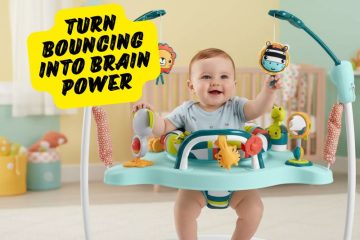
Parents consistently report high engagement due to music, lights, and multiple activity zones. After several weeks, babies continue interacting with different toys rather than losing interest quickly. The 360-degree rotation is a key recurring reason parents choose this model.
Safety concerns appear repeatedly in reviews regarding arm placement. More than one parent reports babies getting arms momentarily stuck between toy arches or support structures, requiring constant supervision. While no injuries are reported, this pattern is mentioned enough to be noteworthy.
After 3–4 weeks of use
- Babies rotate more aggressively as confidence grows.
- Certain toys are ignored while others become favorites.
- Parents learn to reposition baby frequently.
Who should NOT buy this
- Babies who are very active or hyper without constant supervision.
- Parents wanting a compact or foldable jumper.
#1 common buyer mistake
- Assuming all rotating areas are equally safe without monitoring.
Editorial scores (long-term)
- Comfort: 7/10
- Recurring issues: 5/10
- Value over time: 8/10
The most polarized reviews belong to this jumper. On one hand, parents praise the bounce quality, height adjustability, and indoor/outdoor flexibility. On the other hand, hardware durability appears as a recurring concern. Multiple reviews specifically mention the carabiner and rope quality, with some parents replacing parts immediately.
After weeks of use, parents who modified the hardware report continued satisfaction, while those who didn’t express concern over long-term safety.
After 3–4 weeks of use
- Babies remain highly engaged and request it often.
- Hardware wear becomes more noticeable.
- Modified setups outperform stock configuration.
Who should NOT buy this
- Parents unwilling to inspect or replace hardware.
- Families uncomfortable drilling ceiling hooks.
#1 common buyer mistake
- Trusting stock carabiner without inspection.
Editorial scores (long-term)
- Comfort: 7/10
- Recurring issues: 4/10
- Value over time: 6/10
How Parents Interpret Ratings and Reviews Midway Through Use
When parents revisit reviews after ownership, they often reassess what matters most. Durability, comfort, and ease of daily use become more important than aesthetics or features. This is typically where the question What is the best rated baby jumper? resurfaces—not as a shopping prompt, but as a reflection on real experience.
Common Safety Themes Across All Jumpers
Across all five products, several repeated safety considerations emerge:
- Constant supervision is emphasized repeatedly.
- Fit matters more than stated age range.
- Strap and hardware inspection becomes routine.
- Overuse leads to increased wear and noise.
Buyer Advice Based on Review Patterns
Parents who report the highest satisfaction tend to:
- Measure door frames or ceiling height in advance.
- Delay use until baby fits comfortably, not just by age.
- Limit sessions to avoid overstimulation.
- Inspect moving parts weekly.
Age Range Expectations vs. Reality
Although most products list similar age ranges, real-world usage often shortens this window. Babies grow rapidly, and weight distribution and height matter more than months.
Long-Term Comfort vs. Short-Term Excitement
Initial excitement is almost universal. Long-term comfort, however, depends on:
- Seat fabric softness
- Freedom of movement without restriction
- Noise tolerance within the household
Conclusion
There is no single perfect jumper for every family, but understanding real-world usage patterns makes the decision clearer. By focusing on what parents consistently report after weeks of daily use, buyers can avoid common mistakes and choose a product that truly fits their space, baby, and lifestyle. Ultimately, answering What is the best rated baby jumper? depends less on star ratings and more on how well the design holds up in everyday life.
0 Comments